
A little pure gold
On the quality of truth.

Truth lights up the soul in proportion to its purity, not in any sense to its quantity. It isn’t the quantity of metal that matters, but the degree of alloy. In this respect, a little pure gold is worth a lot of pure gold. A little pure truth is worth as much as a lot of pure truth.
— Simone Weil, The Need for Roots
“It’s chock full of astonishing claims, some of which I have no idea just what they even mean, I don’t know how to evaluate them. You know, it’s very—this is the first time I taught Simone Weil. That is not easy, especially not for me and my training, which is, like, find the argument and analyze it. Don’t take that approach to her. It does not go well.”
— Jennifer Frey, on Manifesto!
A little pure gold is worth a lot of pure gold? Clearly, this is not a statement about economics. A little pure truth is worth as much as a lot of pure truth? Tell that to Oedipus, who, when the oracle warned him that he would kill his father and marry his mother, might have appreciated knowing that he was adopted.
“Analysing” an argument, in the words of Thomist philosopher Jennifer Frey, involves determining if there are ways the argument could be false. But as Frey herself can see (in what was honestly an excellent podcast episode), a Simone Weil statement of the type I have given above cannot be taken for some sort of strategically defended argument. It’s easy to think of ways in which it is false. The question then becomes, are there meaningful ways in which is is true?
There is an analogy to be made here to poetry. Metaphors are generally false. They derive power from our ability to suspend criticism and instead perceive truth in them. Still, I wouldn’t quite call this particular statement a metaphor. I read Weil as claiming that there is a sense in which it is true, literally.
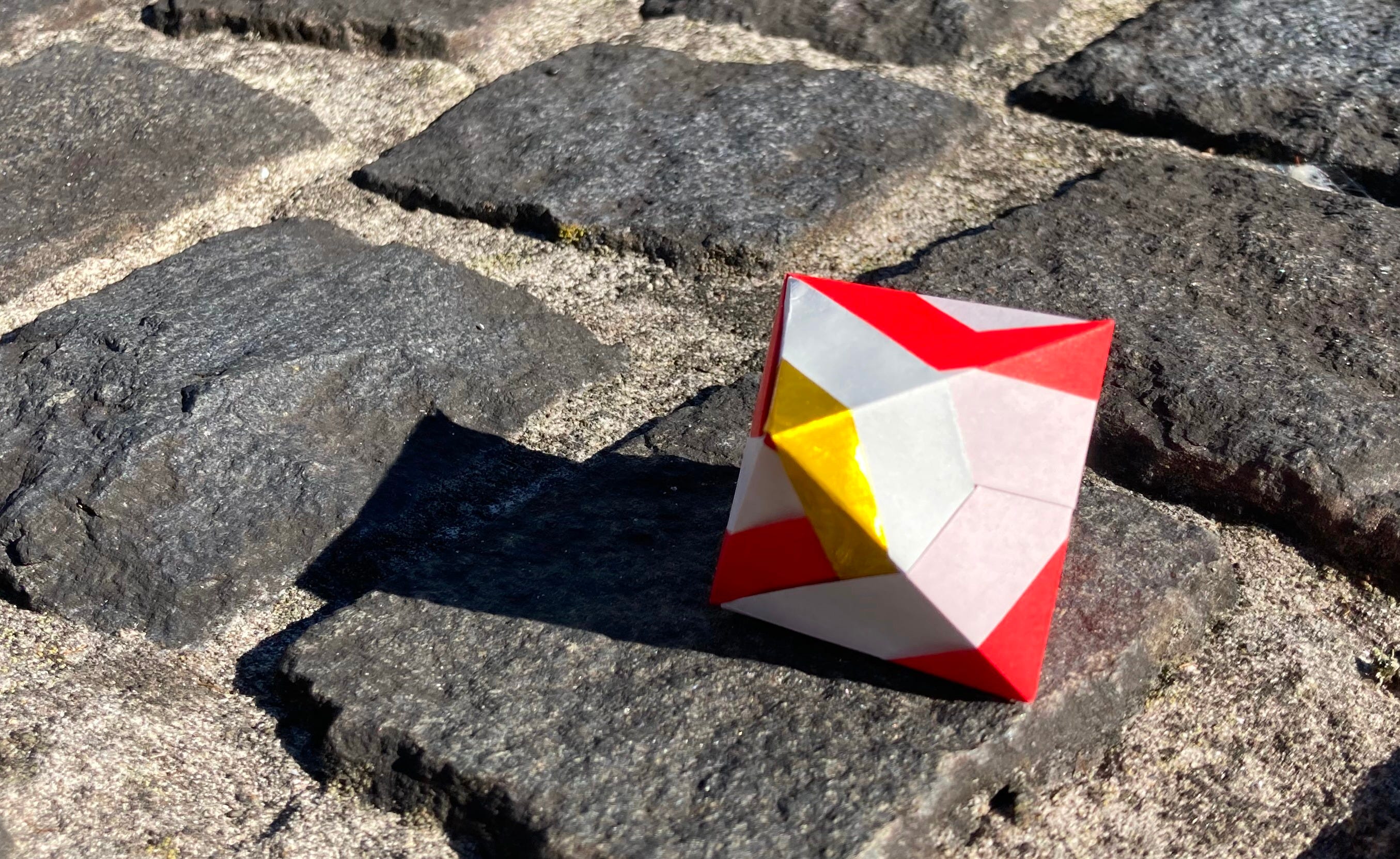
When might the purity of gold matter more than its quantity? One answer might be, if we want to determine the properties of gold. Determining the density or conductivity or natural colour of gold will require pure gold, in order for the answers to be accurate, but it will not require an especially large amount of gold.
Weil’s statement is made in the context of education. More specifically, she is talking about the ability of the wider public to comprehend, and benefit from, the kinds of truths that are often considered to belong in the realm of higher education. Better, she thinks, to really understand a few theorems in geometry—including their method of proof—than to be given a watered-down set of facts that could be memorised in a quicker time. Better to spend time getting into truly good literature than to speed through easier material that has less depth. Quality over quantity.
As with the statement about gold, there are contexts and purposes for which this simply isn’t true. If you’re learning how to read, you can gain a lot by just reading as much as possible of whatever it is you genuinely like to read. More generally, sometimes we gain more skill by doing a thing carelessly and often than we would by attempting to do it perfectly, less often. Yet, as with gold, purity has its uses. Truth itself has qualitative properties that can change a person.
One of the highest privileges that can be had as a teacher of mathematics is to be present when somebody gets their head around a kind of reasoning that did not previously make sense to them. The simpler the thing you are trying to teach, the harder and more unpredictable it is to convey to someone who doesn’t get it. I had a student, once, who was mystified by the concept of proof by contradiction. We were working on the following proof that the square root of two is irrational:
Suppose the square root of 2 is rational. Then it’s equal to a/b where a and b are natural numbers. Square both sides: 2=a2/b2. Now multiply through by the denominator: 2b2=a2.
At this point, we use the fact that every natural number has a prime factorization1 that is unique. The number 2b2=a2 therefore has a unique factorization into prime numbers. Now, a2 must factor into an even number of primes (specifically, two times the number of prime factors of a), and b2 must factor into an even number of primes (specifically, two times the number of prime factors of b), meaning that 2b2 must factor into an odd number of primes (because we’ve added just one more prime factor when we multiplied by 2). But 2b2 and a2 are the same number, and the number of primes that this number factorizes into cannot be both even and odd. Since we have deduced a contradiction, our original assumption that the square root of two can be written as a/b must be false.
I walked her through the proof step by step. She could follow the small linkages, but not the over-arching idea. I tried to abstract out the concept of proof by contradiction into its own principle. I diagrammed the proof on a whiteboard with little arrows to try to show the chain of logic. I diagrammed it on a whiteboard again, with more expressive arrows. I smiled outwardly and privately congratulated myself on my patience. I went through the proof “one more time” several times over.
I have no idea what it was that I did, or even if it was anything that I did, beyond being willing to repeat myself in slightly different ways. All I know is, after about half an hour of this, she suddenly said “Oh.” And then, in that half-yearning way that all of us who love the subject know: “Mathematics is actually really cool, isn’t it?”
The class she was taking was an optional general education class, although we always ended up having more mathematics majors taking it than outsiders, because most students try to pick easy courses for gen-ed. This particular young woman was one of the non-majors, which was of course all the more reason for me to spend time helping her out. But she knew, and said, that she’d be leaving the subject behind, and that she might not feel this kind of insight again. Although I tried to tell her that she could always learn more, I also understood perfectly well why she might not.
Particularly with mathematics, one might ask whether it’s even worth getting this far, when there are other students who can see the logic instantly. Those latter students are the ones the harder classes are almost always aimed at. There are plenty of mathematics professors who opine fatalistically that some things just can’t be taught; you either have it or you don’t. But this is only half true. There are indeed things in mathematics that can’t be taught—and yet, somehow, they can be learned.
I almost envied her that moment of insight. It’s been a long time since I could have feelings about a simple proof by contradiction.
Faced with the paradox of how it is that people somehow learn things that can’t be taught, we might entertain the Platonic notion of anamnesis, which holds that there are things that are “learned” by recollecting what the soul knew before we were even born. I’m not convinced we have souls that are separate from our bodies, but there are some kinds of learning that are so mysterious that this model still sounds halfway plausible. Certainly, it’s better than simply diagnosing most students with an incurable variety of ignorance.
Anamnesis features prominently in Plato’s Meno, and mathematical knowledge is Socrates’ central demonstration thereof. Specifically, Socrates uses a series of questions to walk an uneducated slave through a demonstration: if a two-by-two square has area four, how might we create a square of area eight? Coincidentally, the solution to this problem implicitly involves our old friend the square root of two.
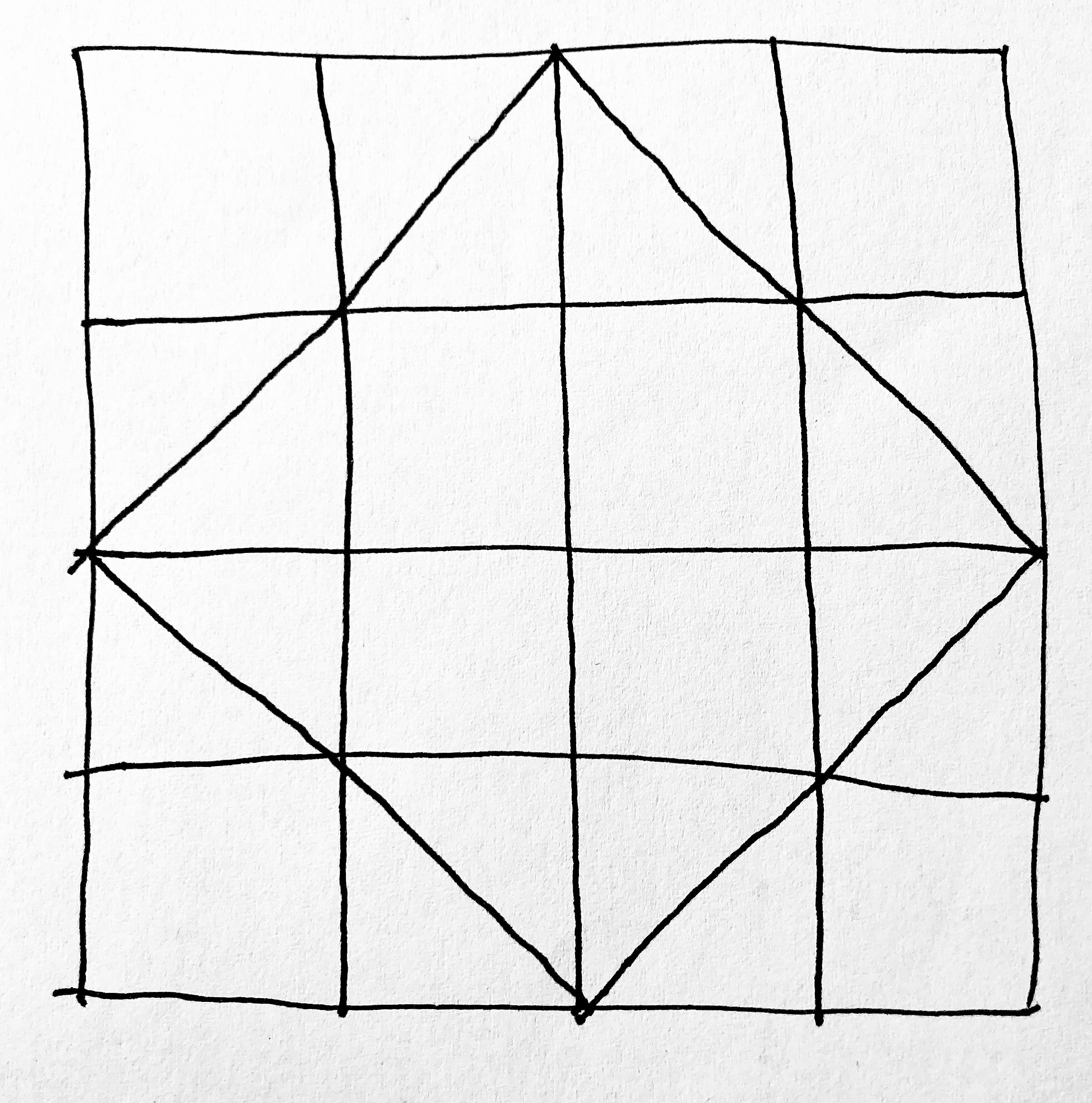
I elicited this answer by questions, says Socrates, so how did this uneducated boy know the answers? Since nobody taught him, we can only conclude that he must have known the answers since birth, deep in his soul, and was then reminded of the answer by my questions.
Questioning is a good way to teach mathematics, that much is true. A question can prompt the active exercise of logic instead of allowing a student to slide into passive acceptance and thence into a false sense of understanding that isn’t really there. Yet, I admit, I find Socrates’ explanation of this phenomenon more provocative than convincing. Indeed, the dialogue has Socrates remark, shortly after this explanation, that he does not insist on its being correct in all respects, but only that it gives us a way of seeking.
The main subject of Meno, however, is the question of whether virtue can be taught. Here we might observe an odd parallel. For Socrates notes that virtue does not seem to be teachable by any reliable method. Courting social backlash, he lists a great many disreputable sons of great and virtuous fathers—fathers who would no doubt have taught their sons virtue if it could be done.
But we might ask, even if virtue cannot be taught, can it—like the subtler aspects of mathematics—be learned? Meno ends with the suggestion that virtue is a gift from the gods. To me, this betrays the central quality that Socrates has previously insisted on, when suggesting that such knowledge might be recollected. It risks returning us to a simple “some people have it, some people don’t” model, instead of allowing for the possibility that we might find our way to insight.
Experiences can develop virtue in us. In C. P. Snow’s The Search, moral development arises from falling in love: “Never before had I been engrossed like this in another: but the drive came spontaneously, as though love had released something already waiting in my mind. … [T]he attempt to understand Audrey, which I could not escape, began to give new dimensions to other people: I did not realise it at the time, but by adding one other life to my own, I could not help being touched by many more.” Relatedly, I have heard it said that the birth of a child can elicit this kind of step in the child’s carers, producing a capacity to live for another being, rather than for oneself.
Yet pair-bonding and parenthood can also be selfish. One person’s infatuation may blossom into care, even as another person experiences a mere self-centred wish for intimacy regardless of the true internal world of the desired person. Parenting involves sacrifice, but it can also be a narrowing of horizons; as Ozy notes, it can create a temptation to be less broadly altruistic, in order to give more to your child. It’s not that people can’t learn virtue, but we don’t do it according to any predictable system. We develop consideration for others in fits and starts, in different ways, sometimes by sudden insight and sometimes so slowly as to be almost invisible.
To what extent does knowledge—whether mathematical or moral—depend on the purity, rather than on the amount? The starkness of Weil’s formulation is stimulating precisely because we so often focus on quantitative notions of utility. If we want mathematics for, say, engineering purposes, then many theorems will usually be better than one. Indeed, many engineers use mathematical results without bothering about how they are proven, often to great effect.
On moral questions, too, there exists considerable movement towards quantity of good done, rather than quality of good done. When Effective Altruists focus on material goods such as health, they are in a sense aiming at the philosophically easy parts of a potentially much-more-complex notion of what it means to flourish as a person. Effective Altruists are quite right to note that, if you want to be a better person and you have some spare cash, then there is a lot of low-hanging fruit still to be picked. It would be perverse to say “Giving money to reduce the spread of malaria is too conceptually easy, so even though I could save several lives by doing so, I won’t bother.” But these quantitative concerns are not the whole truth.
To even comprehend Weil’s perspective on the quality of truth, we require an entirely different manner of thinking. Weil asks us to consider what truth does to the human soul, rather than what practical powers the truth might give us. How does it change you, when you have a moment of insight—or when a truth slowly works its way into your being until it becomes a natural part of the way you think?
In an odd way, Weil’s statement strikes me as self-referential. There is a truth she is pointing to, about the qualitative value of comprehending truth as truth, regardless of how many specific theorems you understand or how many books you have read. Though it can only be seen by looking through her words instead of merely taking them at face value, nevertheless there is a pure truth here that has the power to re-orient our priorities.
If we try to speak truth so as to do the most good, quantitatively, then we might alter our writing to fit current fashions, chase subscriber metrics, and attempt to say the simplest possible things that will convince the widest number of people. But if we are trying to speak truth so as to convey the most good, qualitatively, then we will hope to change a few people, maybe even in ways we can’t predict, if the reader obtains a genuine insight from what we’ve written. Those changes, though they will often be less broad, may be more lasting, and more effective, precisely because they have the staying power of pure truth, deeply comprehended.
I think that student of mine who understood proof by contradiction, as a whole, was learning something valuable in itself, regardless of whether she learned any further mathematics and independently of what grade she got or how she compared to any other student. Something important also occurs when we read something that expands our capacity to consider the truth about ourselves, or about others. Nor, indeed, is this kind of truth-related personal development confined to the quasi-academic. There are truths to be found in the intricacies of a craft, in the bodily knowledge needed to perform a physical task, in the patience required for care work.
Holistic truth, to the extent that we can comprehend it, depends on all of these things and more. When we consider that mathematical truths and moral truths might be related, it is not that learning mathematics will, by itself, make you a better person, but rather that we are considering the possibility of a kind of truth that is so broad that it could encompass both, and more beyond. To attempt such understanding, we must seek pure truth wherever it may hide.
In one of many unexpected internal linkages that have shown up in this piece, the Wikipedia page linked here references André Weil, brother to Simone.
I've been meaning to write about Weil and geometry and you beat me to it! For the reasons you explain, I don't think it makes sense to characterise metaphors as false just because the correspondence is not exact in every detail. Any type of modelling (and the human imagination is a type of modelling) is just a representation of the Ding an sich, but these approximations of the truth is the best we can do. Trying to see the world more truthfully is, I think, a necessary action before one can attempt to change it for the better.
Yhis was a wonderful essay. Loved it not because it made clear how much of HS math I don't remember (my college math consisted of Logic and "Math for Poets and Jocks," i can't remember the real name but that's what we called it) or because I totally get both you and your student, but because of the beautiful exploration of different ways of getting at underlying truths and recognition of the different ways of getting there and how different methods & paradigms can be the best approach depending on the person or situation.
That may not be what you *meant* for us to get out of it, but I appreciated the takeaway regardless, and also the openness to the validity of different perspectives that far too few people have (and that many who say they have clearly don't- they are often the most smarmy about it).
My own undergrad philosophy department was run by the sort of people who fully agreed that they couldn't even understand what people like Weil were saying, and were very open about thinking it was incoherent nonsense that couldn't be properly analyzed, and if you were going to try to do a paper on them, realize thst if could not make coherent sense out of something fundamentally coherent and convince them of it, they would have no choice but to fail you for writing incoherent nonsense yourself. I like challenges but didn't want to fail so never chose those paper topics. A professor I *liked* told me that. (The guy I wrote about convincing me to become a philosophy minor retired, I was in his last semester of full time teaching) wish I'd had you as a teacher back then!
And